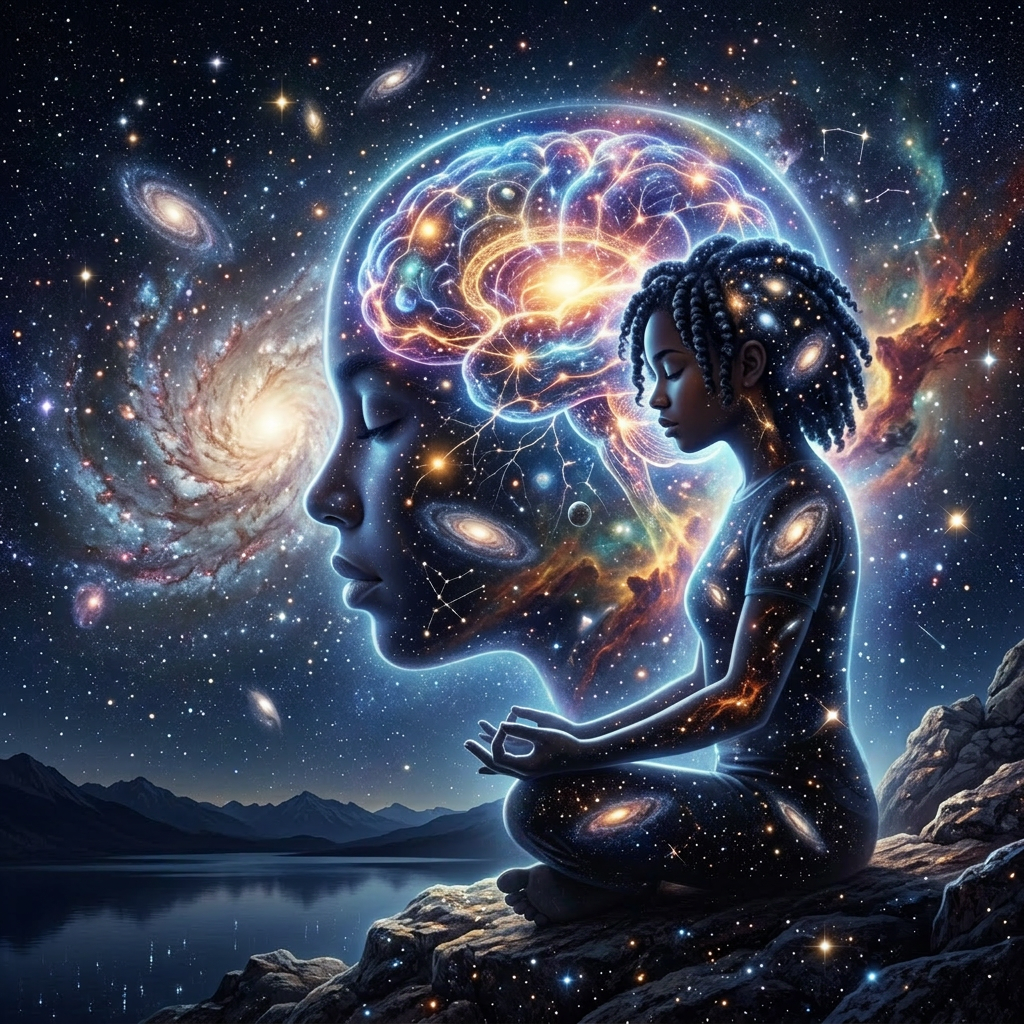
What do our hesitations say about us?
While seemingly a philosophical question, this is my true attempt at analyzing the current state of technology and workmanship in the era of AI. (what the hell does that even mean, right?)
I want to be quick, but I can’t! So we have to talk about it. Top to bottom, no skimming.
We’ll talk about artificial intelligence and the lived reality of what it feels like to use a tool that thinks alongside you. Then, we’ll talk about professionalism and what it even means to be skilled when skill can be simulated.
And then, absolutely most importantly, we’ll talk about the condition of the human spirit. That’s where we’ll really talk. Not about data and certainly not about productivity metrics, but what truth may be underlying what we’re actually feeling inside all of this noise.
Do you have a minute?
Okay so…let’s talk. For real.
I. Artificial Intelligence
The tool that talks back.
I think every generation has had its “this changes everything” moment and then figured out how to keep living. But this time feels different, a little spooky and a little dystopian because for the first time, AI is doing the thing we thought was exclusively ours: language, reasoning, and the appearance of understanding.
And that’s where it gets weird, right? You type something in…and it responds with something…that sounds like it gets you? It finishes your sentences. It offers you three versions of the email you were dreading writing. And part of you is relieved, and part of you is unsettled, and you’re not totally sure which feeling to trust.
Here’s what I keep coming back to: AI doesn’t have stakes or baselines or the glorious wisdom that comes from lived experience. It can write your resignation letter and feel nothing or it can create a thoughtful birthday message (completely negating the thoughtfulness of a birthday message…and yes I can 100% tell when I’ve received a birthday message someone wrote using an AI tool…but anyway). It produces without any of the friction that makes human output mean something. Friction really just might be the whole point. The struggle to find the right word is how you know it’s the right word and the hour you spent rewriting that paragraph is proof that the paragraph mattered to you.
When the tool removes the friction, does the meaning go with it?
I’m not saying don’t use it. I use it! You probably do too. But I think the honest question isn’t “is AI good or bad?”. The question is “what am I outsourcing, and is that okay with me?” Because some things are worth the struggle and we’re each going to have to figure out where that line is for ourselves.
II. Professionalism
What does skilled even mean anymore?
Professionalism used to mean you’d put in the time, right? The ten thousand million billion hours. Now it can mean something else entirely, almost falling within the realm of curation, direction, and taste. Knowing what to ask for and recognizing when it’s right.
Maybe the new professional isn’t the one who can do everything. It’s the one who knows what everything is for.
What I think we’re losing is the relationship between effort and result. When you struggle to make something, you are guided to understand it differently. You know where it’s weak and you know why you made the choices you made. Nuance! That understanding used to be the mark of a professional. We’re going to have to build a new definition (quickly!) or we’ll spend the next decade arguing over credentials while the world passes us by.
III. The Human Spirit
Now, let’s really talk.
People are tired. Not just physically, but in a truly deeper, palpable way. There’s a kind of exhaustion that comes from feeling like the ground is constantly shifting, and that’s not laziness or weakness. That is just what it feels like to be human in moments of relentless change.
Let’s pause for a moment. Allow me to remind you that the machine doesn’t wonder, it doesn’t grieve, it doesn’t hurt, it doesn’t miss people, it cannot feel inspiration, and it doesn’t make something because it needs to. And that need, that irreducible and special human need to make meaning, is not a flaw in the system. It is the system. Inspiration breeds creativity and curiosity encourages exploration. I think that euphoric feeling of an experience inspiring action is uniquely human and ours to keep.
Your hesitation to adapt is the data, and it’s telling you something. Maybe that this thing matters to you and you don’t want to get it wrong…maybe that you’re not sure who you are without the struggle…maybe you’re grieving a version of work, of craft, of connection, that is changing faster than you can process.
All of that is worth listening to as information about what you actually value. Because the goal isn’t to resist the future, but to bring yourself into it. Fully and consciously, with your whole history and your weird little human heart intact.
Somewhere in the midst of all the shiny tools, there will still be a person who stayed up too late trying to get a paragraph right, someone who tries to verbalize the inspiration they felt looking at a piece of art by writing a lovely poem. A person, a creative, a professional, who relishes in the grueling process of making something guided truly by the whispers of their own spirit. Not despite all the available shortcuts, but in full knowledge of them.
That person is the story and the reason for this article. That’s what our hesitations say about us I think; that we still care to integrate the truth and nuance of lived experience. And in the middle of all this, that might be the most important thing we’ve got.


 hey, girl! its DaCoda!
Leave a comment